.png)
Summary
READ ITProduct feeds are the base of Google Shopping and Performance Max. Every ad starts with the product data to Google that you upload to Google Merchant Center. If that data is weak, performance drops. Even good Google Ads campaigns cannot fix poor feed content.
Feed enrichment means improving your product feed. You add more details, modify values, and set better attributes. This helps Google understand what you sell and how to show it.
This article explains how feed enrichment functions, why it matters, and how it helps Google Shopping ads perform better.
What feed enrichment means
Feed enrichment means adding better product information to your feed in Google’s Merchant Center.
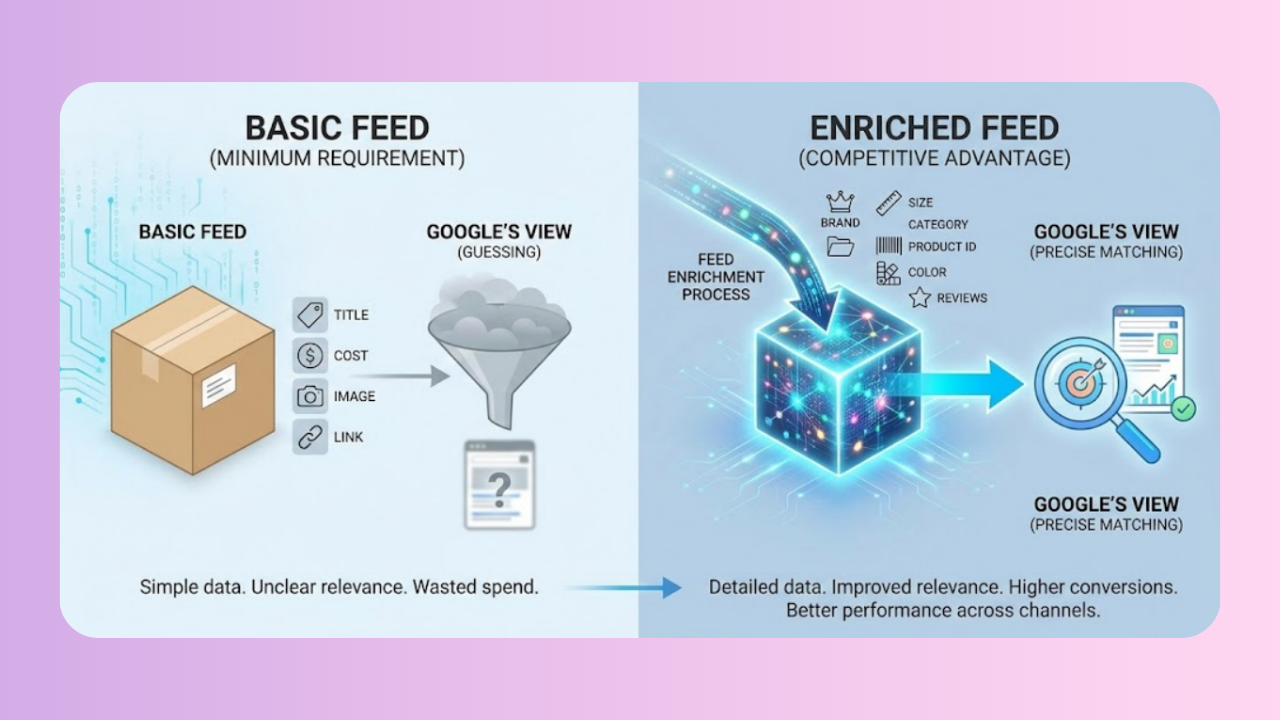
Most stores start with a basic file or Google Sheets feed. It may include a title, cost, image, and link to the product page. That is enough to meet the minimum requirement. It is not enough to compete.
Enrichment lets you include more useful details. You can add attributes to your Google feed like brand, size, category, and product id.
You are not changing the product. You are changing how Google sees it.
Why feed enrichment matters
Google Shopping and Performance Max rely on feed data. There are no keywords like Google Search ads. Google uses your feed to decide when ads appear and which listing to show.
If the data is unclear, Google guesses. That hurts relevance and wastes spend.
Feed enrichment helps Google match products to the right search. It improves clicks, performance, and conversions over time.
This is especially important when you want to sell across different channels.
Problems with basic product feeds
Many stores create a feed directly from Shopify, WooCommerce, or WordPress. This is fast, but the data is often weak.
Common problems include:
Short product titles Missing size or brand Wrong Google Product Category Poor descriptions Outdated price tags or sale data
These issues limit reach and reduce visibility in Google Shopping listings.
Improving product titles
Product titles are the most important part of the feed.
A good title tells Google exactly what the product is. It includes brand, product type, and key details. It follows the right format.
Bad titles are vague. They do not help Google find the right searches.
Feed enrichment helps you provide Google with clearer titles that match real search behavior.
Improving product descriptions
The description field gives context.
Good descriptions explain what the product is, how it is used, and who it is for. They avoid filler text.
This helps Google understand the product and improves matching in Shopping and Performance Max.
Categories and product type & Using attributes correctly
Categories matter more than many people think.
Feed enrichment helps you select the right Google Product Category and add a clear product type. This helps Google place products correctly.
Better categorization improves visibility and relevance. Attributes like size, color, material, and condition matter. Google uses these values to filter and group products. Missing attributes reduce exposure.
Feed enrichment makes sure attributes are complete and consistent. This helps Google show the right product at the right time.
.png)
Price, availability, and updates
Price and availability must always match the website.
Feed enrichment helps you change and modify prices, manage sales, and keep stock status correct. This prevents disapprovals and wasted spend.
Feeds should be updated in Google regularly. Old data causes problems.
Feed approval vs feed quality
Getting approved does not mean your feed is good.
Approval only checks basic rules. Feed quality affects results.
Enrichment improves how products compete in auctions and how often they show in Google Shopping ads.
Manual vs automated enrichment
Small stores may enrich feeds manually. This works for a short time.
But as the number of products grows, manual work breaks down. Products change. New items are added. Prices move.
Automation uses rules to manage updates at scale. It helps keep data clean and consistent.
Most strong accounts use automation.
How feed enrichment helps campaigns
Good feed data makes it easier to manage campaigns.
You can group products better. You can control bids. Reporting becomes clearer in Google Analytics. This matters when running Shopping and Performance Max together.
Some people overfill titles with keywords. That hurts clarity. Others enrich once and never update again. Good enrichment stays simple. It stays accurate. It follows Google rules.
Feed enrichment in Merchant Center is not optional. Good data helps Google show your products. Bad data hides them. If your Shopping results are unstable, the feed is often the reason. Fix the feed first. Everything else works better after that.
.jpeg)
.jpeg)